Why Most Beginners Fail at Mastering Their New Air Purifier (And The Layered Approach That Actually Works)
You’ve made the leap. The new air purifier, sleek and humming, sits proudly in your living room or bedroom, promising a sanctuary of clean air. You read a few reviews, clicked ‘buy,’ and now you expect to breathe easier, sleep better, and suffer less from seasonal allergies. Yet, a few weeks or months in, you’re wondering if it’s really doing anything. Your allergies persist, that subtle pet odor lingers, and the air just doesn’t feel fresh the way you imagined.
I see this scenario play out all the time in my practice. People invest in technology, hoping for a quick fix, only to be disappointed because they haven’t adopted a layered approach to truly integrate it into their environment. It’s not enough to plug it in and press ‘on.’ Effective air purification is a holistic endeavor, combining smart device placement, consistent maintenance, and an understanding of your home’s unique airflow dynamics. Without this deeper engagement, your expensive new gadget is likely just moving air around, not actually cleaning it effectively.
In my experience, the biggest mistake people make is treating an air purifier like a ‘set it and forget it’ appliance. The truth is, optimizing indoor air quality requires ongoing attention and a strategic mindset. I’m going to share the specific insights I’ve gathered from years of advising patients on environmental wellness, offering concrete, actionable steps to move beyond beginner mistakes and genuinely transform your home’s air quality.
Key Takeaways
- Your air purifier’s effectiveness hinges on strategic placement and understanding your home’s unique airflow.
- Neglecting filter maintenance is the fastest way to render your air purifier useless and potentially reintroduce pollutants.
- Proper sizing and run-time are critical; an undersized purifier or inconsistent use will deliver minimal results.
- Integrate your air purifier with other indoor air quality strategies for a truly comprehensive approach.
The Placement Trap: Why ‘Anywhere’ is the Wrong Place
When you unbox your new air purifier, the natural instinct is to put it where it’s most convenient, or perhaps tucked away so it doesn’t disrupt your decor. This is the first critical misstep. An air purifier isn’t a decorative lamp; its location dictates its efficacy more than almost any other factor. In my consultations, I’ve seen countless patients placing their units in corners, behind large furniture, or even in hallways, expecting it to purify an entire open-concept living space. This simply won’t work.
Think of your air purifier as a vacuum cleaner for the air. You wouldn’t vacuum your entire house from a single corner, would you? The same logic applies. Air purifiers need open space to draw in polluted air and expel clean air efficiently. Ideally, it should be placed in the room where you spend the most time, such as your bedroom, and positioned centrally within that room, away from walls or obstructions. For example, if you have a 300-square-foot bedroom, placing a unit designed for that size in the middle of the room, with at least 12-18 inches of clearance around it, will create a much more effective air circulation pattern than if it’s shoved against a wall.
Moreover, consider the sources of pollution. If you have a pet bed that’s a hub for dander, placing the purifier closer to that area, even if slightly off-center, can be beneficial. If cooking odors are your main concern, a portable unit brought into the kitchen during and after cooking can make a significant difference. The mistake I see most often is failing to account for the actual flow and origin of airborne particles. A small, high-quality unit strategically placed in a bedroom will outperform a larger, less optimized unit trying to cover an entire floor from a corner. It’s about precision, not just power.
The Neglected Filter: Your Air Purifier’s Achilles’ Heel
Here’s a confession: for years, I was terrible at remembering to change the air filter in my home HVAC system. I know how easy it is to forget something out of sight. The same principle applies, perhaps even more critically, to your air purifier. The filters are the heart of the system; they’re what actually capture the pollutants. Yet, most beginners vastly underestimate the frequency of replacement or cleaning required, effectively rendering their device a noisy fan.
HEPA filters, for instance, are designed to trap 99.97% of airborne particles 0.3 microns or larger. But what happens when that filter is caked with dust, pet dander, and pollen? Its efficiency plummets. It struggles to draw air through, reduces the clean air delivery rate (CADR), and in some cases, can even start blowing trapped particles back into your air. Imagine trying to filter water through a clogged coffee filter – it either won’t go through, or it’ll just push sediment back into your cup.
Most manufacturers provide clear guidelines for filter replacement, typically every 6-12 months for HEPA filters and 3-6 months for activated carbon filters (which tackle odors). However, these are general guidelines. If you live in a high-pollen area, have multiple pets, smoke indoors, or are doing renovations, your filters will clog much faster. I tell my patients to set a recurring reminder on their phone or calendar for every 3 months. When the reminder pops up, physically check the filter. If it looks visibly grey or brown, or if the unit seems to be working harder for less output, change it. Don’t wait until the ‘change filter’ light comes on, as those indicators are often based on a fixed timer, not actual filter saturation.
The Sizing & Run-Time Misconception: More Than Just Square Footage
When you purchase an air purifier, you’ll typically see a recommended room size in square feet. This is an important starting point, but it’s a deeply insufficient metric for real-world performance. Many people buy a purifier rated for their room size, run it for a few hours, and then turn it off, expecting magic. This is like trying to boil water by only turning on the stove for five minutes – you’ll get some heat, but no boil.
What truly matters is the Clean Air Delivery Rate (CADR) and the Air Changes Per Hour (ACH). CADR measures how quickly the purifier removes pollutants (smoke, dust, pollen) from the air. ACH tells you how many times per hour the purifier can exchange all the air in a given room. For most wellness goals, especially allergy or asthma relief, you want an ACH of at least 4-5. This means the air in your room is being fully cleaned every 12-15 minutes. To calculate your actual ACH, you’ll need the CADR, your room’s square footage, and ceiling height (typically 8 feet).
Here’s a simplified formula to estimate ACH: ACH = (CADR x 60) / (Room Square Footage x Ceiling Height)
So, if you have a 250 sq ft room with 8-foot ceilings, and your purifier has a CADR of 150 (for dust), your ACH would be (150 x 60) / (250 x 8) = 9000 / 2000 = 4.5. This is a good baseline. The key is to run your air purifier consistently, ideally 24/7, especially in your primary living and sleeping spaces. Turning it off for hours at a time allows pollutants to build back up, negating much of the benefit. What changed everything for me was realizing that continuous, lower-setting operation often beats intermittent, high-setting bursts. It maintains a constant state of cleanliness rather than playing catch-up.
Overlooking Home Dynamics: Airflow and Ventilation
Many first-time air purifier owners focus solely on the device itself, ignoring the broader context of their home’s ventilation and airflow. Your home isn’t a sealed box; air is constantly moving in and out, bringing in new pollutants and circulating existing ones. Ignoring these dynamics can severely limit your purifier’s impact.
For example, if you have old, leaky windows, a significant amount of outdoor pollen and dust will continuously infiltrate your home, making it an uphill battle for any single air purifier. Similarly, kitchens and bathrooms, often sources of strong odors and humidity, require targeted ventilation (like exhaust fans) in addition to, or sometimes more than, a portable air purifier. The mistake I see is a singular focus on the purifier, rather than understanding it as one component in a larger system.
Consider the path of air in your home. Opening windows for short periods, especially during low pollen times, can introduce fresh air, but too often or at the wrong time, it can bring in more pollutants. Instead, think about creating zones. Keep bedroom doors closed when the purifier is running to maximize its effect in that space. Use exhaust fans in bathrooms and kitchens diligently. Ensure your HVAC system’s filter is also regularly cleaned or replaced, as it’s your first line of defense against whole-house air quality issues. What truly works is seeing your air purifier not as the solution, but as a powerful tool within a holistic indoor air quality management strategy.
The ‘One-Size-Fits-All’ Trap: Customizing for Specific Pollutants
Not all indoor air pollution is the same, yet many beginners treat their air purifier as a generic solution for all problems. You wouldn’t use a hammer to drive in a screw, and similarly, a basic HEPA filter, while excellent for particles, won’t address volatile organic compounds (VOCs) from new furniture or paint, or persistent odors from cooking or pets.
This is where understanding filter types becomes crucial. HEPA filters are fantastic for particulate matter like dust, pollen, pet dander, and mold spores. If allergies are your primary concern, a strong HEPA is paramount. However, if you’ve recently renovated, bought new furniture, or struggle with chemical sensitivities, you need activated carbon filters. These filters use a porous material to adsorb gaseous pollutants and odors. Many high-quality air purifiers come with a multi-stage filtration system that includes both, but it’s important to verify this and understand which filter tackles which problem.
I often advise patients to consider their primary air quality concerns. If you have a cat and severe allergies, prioritize CADR for pet dander and a robust HEPA filter. If you live in an apartment where cooking odors from neighbors are an issue, a unit with a substantial activated carbon filter will be more effective. The mistake is assuming any air purifier will solve all problems. Tailoring your choice and understanding the capabilities of your specific unit’s filtration system will lead to far greater satisfaction and cleaner air.
Beyond the Box: Integrating Air Purification into Mindful Living
Finally, true mastery of your air purifier goes beyond technical specs and maintenance schedules; it’s about integrating it into a mindful approach to your living environment. This means recognizing that air purification is an ongoing process, not a one-time setup. It involves developing an awareness of your indoor environment and making small, consistent choices that collectively improve air quality.
For example, consider regular dusting with a microfiber cloth and vacuuming with a HEPA-filtered vacuum. These actions directly reduce the particulate load your air purifier has to handle. Mindful choices, such as using natural cleaning products, avoiding aerosol sprays, or airing out dry-cleaned clothes before bringing them inside, all contribute to reducing VOCs and other chemical pollutants. Even something as simple as taking off your shoes at the door prevents tracking in outdoor allergens and pesticides.
What truly changed everything for me, both personally and in my advice to patients, was understanding that an air purifier is an enhancement to healthy living habits, not a replacement for them. It augments a clean environment, it doesn’t create one in a vacuum (pun intended). When you combine smart device usage with conscious daily habits, you’re not just purifying the air; you’re cultivating a healthier, more intentional home environment that supports your overall well-being.
Frequently Asked Questions
## How do I know if my air purifier is actually working?
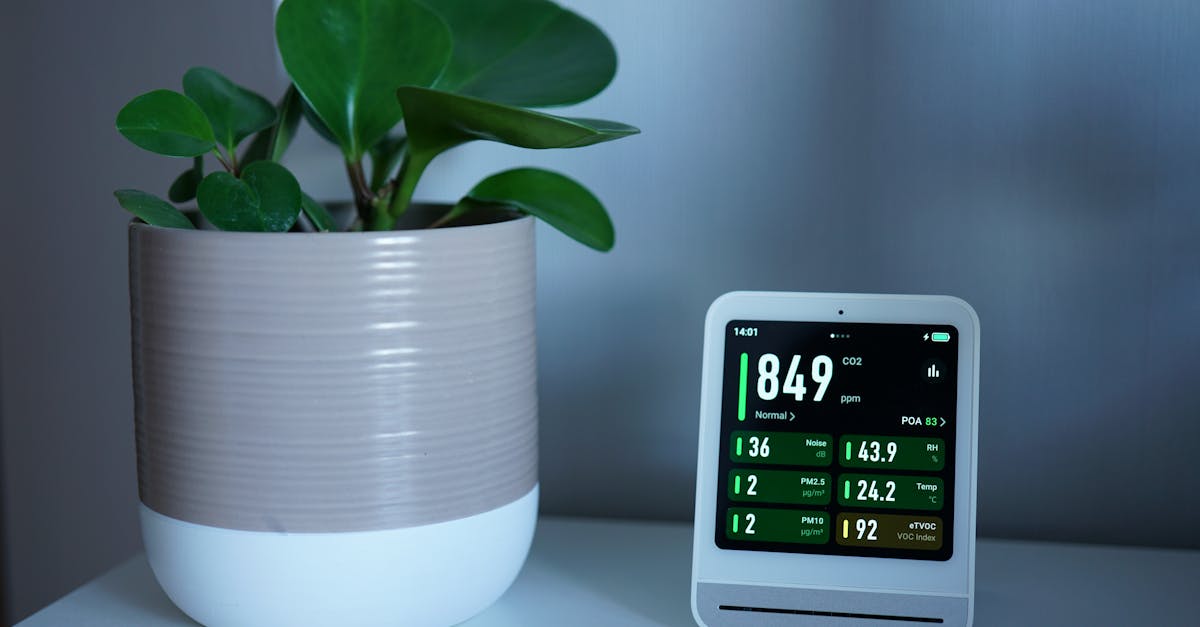
Look for tangible signs like reduced allergy symptoms, diminished odors, and less visible dust accumulating on surfaces. Many modern purifiers also have air quality sensors that give real-time readings, though these can vary in accuracy. The most reliable indicator, in my experience, is feeling a noticeable improvement in your breathing and overall comfort in the room. A visibly dirty filter when you go to change it is also a strong sign it’s been doing its job.
## Can I run my air purifier with windows open?
Generally, no. Running an air purifier with windows open defeats its purpose, as it will constantly try to purify the outdoor air flowing in. This wastes energy and saturates your filters much faster. The exception might be for a very short period to air out a specific strong odor (like burnt food), but for regular operation, keep windows closed to maximize efficiency.
## How many air purifiers do I need for my home?
This depends on your home’s layout, your specific concerns, and your budget. For optimal results, you ideally need a purifier for each room you spend significant time in, especially bedrooms. For open-concept spaces, a larger unit strategically placed in the main living area, potentially supplemented by smaller units in specific zones (like a home office or pet area), is a good strategy. Prioritize the rooms where air quality matters most for your health or comfort.
## Are all HEPA filters the same?
While the HEPA standard (capturing 99.97% of particles 0.3 microns) is consistent, the quality and lifespan of HEPA filters can vary between manufacturers. Some cheaper filters may not hold up as well or might be less dense. Always buy replacement filters recommended by your unit’s manufacturer to ensure compatibility and stated performance. Also, note that ‘HEPA-type’ or ‘HEPA-like’ filters do not meet the true HEPA standard and will be less effective.
## What are VOCs and why should I be concerned?
VOCs, or Volatile Organic Compounds, are gases emitted from certain solids or liquids, including paints, cleaning supplies, new furniture, carpets, and building materials. They can cause short-term health effects like headaches and nausea, and long-term effects like liver and kidney damage, and even cancer. If you have new items in your home or use strong chemical cleaners, you should ensure your air purifier has an activated carbon filter designed to adsorb these gaseous pollutants.
Conclusion
Mastering your air purifier isn’t about complicated technical wizardry; it’s about understanding its role, making informed choices, and integrating it mindfully into your daily life. By strategically placing your unit, diligently maintaining its filters, understanding the true meaning of sizing and run-time, considering your home’s unique airflow, and customizing for specific pollutants, you can move beyond beginner frustrations. Embrace this layered approach, and you’ll not only unlock the full potential of your device but also cultivate a consistently healthier, more invigorating home environment. Start by checking your filter today – it’s a simple, powerful step towards breathing easier.
Written by Dr. Anya Sharma
Health, nutrition, and stress reduction
A licensed nutritionist and wellness advocate, Anya focuses on accessible approaches to physical and mental well-being.
You Might Also Like

Why Most Beginners Fail at Mastering Their New Fitness Tracker (And The Habit-Driven Approach That Actually Works)
Uncover why most people abandon their fitness trackers. Learn a habit-driven approach to leverage your device for real, lasting health changes.

Why Most 'Budget-Friendly' Dog Food Fails (And What Actually Nourishes Your Pet for a Healthier, Happier Life)
Discover why cheap dog food often falls short of providing real nutrition and how to choose food that truly benefits your dog's health without breaking the bank. Authored by Dr. Anya Sharma.

Why Most Beginners Fail at Personal Reinvention (And The Identity-First Approach That Actually Works)
Discover why traditional personal reinvention methods often fall short and how an identity-first approach can lead to lasting, transformative change.